Is Local AI Actually Cheaper Than API? The Honest Math for 2026
Learn when running local AI models beats cloud APIs in 2026 by calculating hardware costs, volume break-even points, and compliance needs.
Is Local AI Actually Cheaper Than API? The Honest Math for 2026
Local AI used to be the budget hack for developers. In 2026, that’s a myth. Think of it like a commercial espresso machine: the upfront cost is steep, but if you drink twenty cups a day, the cafe subscription eventually loses. The same math applies to AI, except the hardware floor is now real. With entry costs reaching $15,000 and API token rates competing fiercely, running models yourself is no longer a default cost-saver. It’s a targeted infrastructure investment that only makes financial sense when you’re processing millions of inferences or handling data that can’t leave your building.
The 2026 Capability Shift: Can Local Models Actually Compete?
In 2026, the question isn’t whether local models can run; it’s whether they should. The gap between local open-weight models and cloud giants has shrunk, turning local AI from a novelty into a serious production contender. Models like Llama 3 and the newer Llama 3.3 now show remarkable parity with leaders like GPT-4 and Claude 3.7 in specific domains. This isn’t just about casual chat; it’s about production coding and batch data processing. When you ask if local models are good enough for your stack, the answer is increasingly yes.
Developers on r/LocalLLaMA frequently note that the quality leap is palpable. You no longer have to choose between a capable paid API and a broken local experiment. For many use cases, local options are better suited for environments where latency, privacy, or custom fine-tuning matter. This evolution means you can deploy local models with confidence, provided you match the model size to the task. Platforms like MindStudio now frame local inference as a standard part of the modern AI toolkit, not a fringe alternative.

The Hardware Floor: Breaking Down the $500 to $15,000 Investment
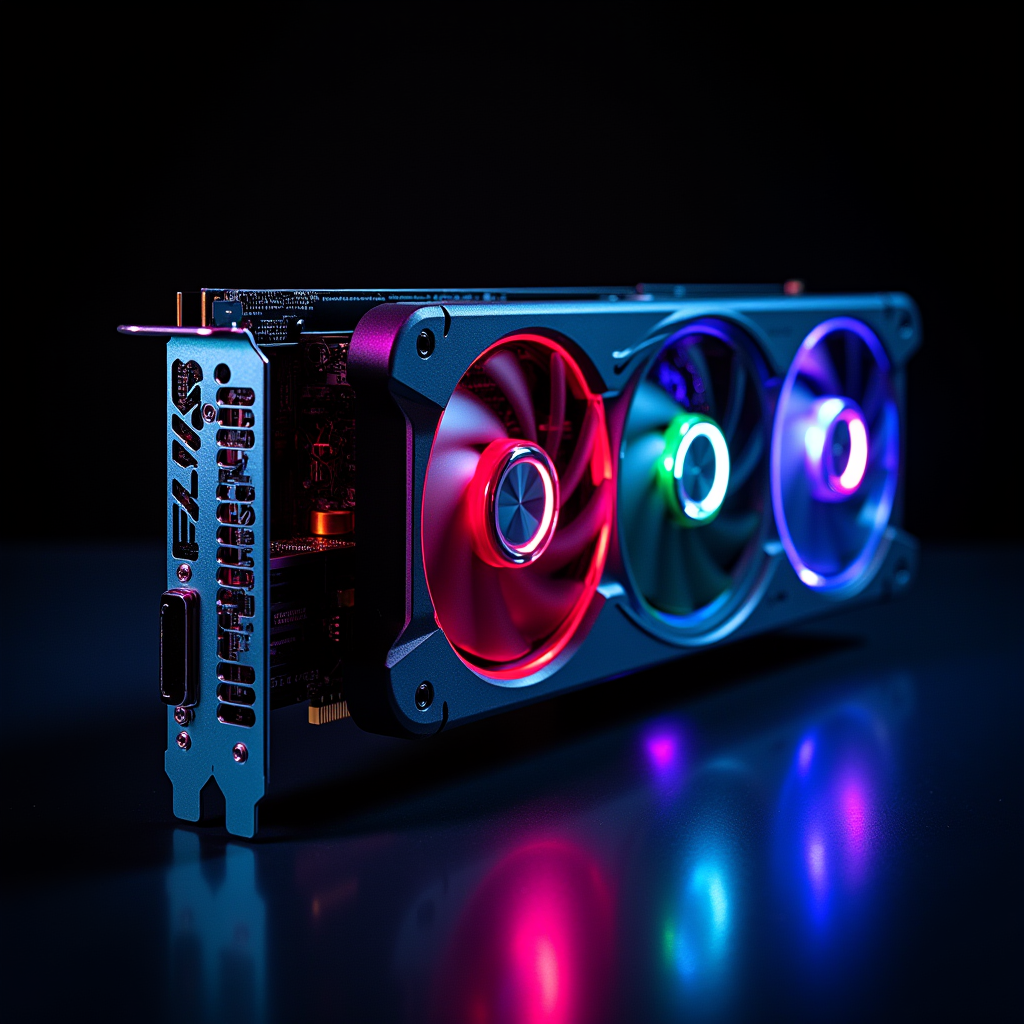
Before you buy a GPU, you need to understand the barrier to entry. The hardware floor for local inference is no longer a used gaming card; it’s a significant capital expenditure. Data confirms a minimum entry point around $500 for basic setups, but this is often the absolute baseline for smaller models or less demanding workloads. For serious deployment capable of handling larger models like Llama 3.3, the investment scales up quickly.
We see tiers where $5,000 becomes the standard for robust local GPUs, and for organizations requiring maximum throughput or running the largest parameter counts, the floor can reach $15,000. This $15,000 figure, supported by multiple sources, represents the cost of professional-grade hardware necessary to keep latency low and batch processing efficient. You also need to account for peripheral components, cooling solutions, and power supplies, which can add another $50 to several thousand dollars to the build. An honest calculation must include these hardware costs upfront, as they are the price of admission for independence. Some single-source reports suggest entry points as low as $300 or specific token costs like $0.15, but you should treat these figures with caution. They may not reflect the robust infrastructure needed for stable, 24/7 inference, so view them as best-case scenarios rather than guaranteed averages.

The Math of Volume: When Subscriptions Become More Expensive
The core of the decision rests on the math of volume. Cloud APIs charge per token; local AI charges with electricity and depreciation. If you’re running a low-volume script, the paid API is almost certainly cheaper. You pay for flexibility without the headache of maintenance. However, as your volume scales, the math flips. Subscriptions add up. If you’re processing millions of inferences, the recurring cost of cloud APIs can eclipse the one-time hardware investment.
The break-even point depends entirely on your throughput. For high-volume data pipelines, the cloud cost curve eventually crosses below the hardware floor, making local inference the financially superior path. Consider a scenario where you’re building a chatbot with thousands of daily active users or a system that processes large datasets in batch mode. In these cases, the per-token fees from paid APIs can accumulate rapidly, turning a small expense into a major line item. By running models yourself, you cap your costs at the hardware investment plus utilities, allowing for predictable budgeting at scale. You should project your usage over a reasonable period and compare the total cost of ownership. For many enterprises, this crossover happens at significant scale, making the local route the only sustainable option.
Compliance and Data: The Non-Negotiable Drivers for Local Inference
Sometimes the decision isn’t about the price tag; it’s about risk. If your data is bound by HIPAA or ITAR regulations, the cloud might be a non-starter regardless of cost. Sending sensitive data to a third-party API introduces compliance risks, potential data logging by providers, and regulatory hurdles that can be impossible to navigate. Local inference solves this by keeping your data on-premise. You process sensitive information without it ever leaving your control.

In these scenarios, the hardware investment is not just a cost calculation; it’s a risk mitigation strategy. The value of local AI here is measured in compliance assurance and data sovereignty. Even if the API looks cheaper, the cost of a breach or a compliance violation can be catastrophic. Platforms like Hikmah Technologies highlight that for regulated industries, the local model is often the only viable path, transforming the decision from a budget exercise into an operational necessity. The localllm ecosystem thrives on privacy-first architectures, offering solutions for organizations that cannot risk data leakage. When compliance is the priority, local AI becomes better than any cloud alternative, regardless of the token price.
The Catches: Hidden Costs, Maintenance, and Reality Checks
Running models yourself comes with catches that can derail a project if ignored. First, running models yourself does not eliminate infrastructure costs; it shifts them. You are responsible for electricity, cooling, hardware depreciation, and the time spent troubleshooting. A GPU can fail, drivers can break, and model updates can introduce regressions. You need engineering expertise to manage quantization, VRAM optimization, and system stability. The “hobbyist” label sticks for a reason; true production stability requires engineering rigor.

Second, the performance of local models can vary based on hardware constraints. While Llama 3.3 is powerful, running it on underpowered hardware can result in sluggish inference times that hurt user experience. You must ensure your hardware matches the model’s requirements to deliver a good user experience. Third, the ecosystem is still evolving. You must stay updated on the latest optimizations and tooling, which requires continuous learning. Finally, the biggest catch is cost inefficiency at low volumes. If you don’t have the volume to amortize the hardware, or the compliance need to justify it, you are likely better off using a paid API. Investing in local AI is an operational commitment, not just a software download. You need to weigh these catches against the benefits to determine if the migration makes sense for your specific context.
The Verdict: A Strategic Calculation, Not a Default Move
The choice between local AI and cloud APIs is no longer a binary decision based on price alone; it’s a strategic calculation involving volume, compliance, and operational capacity. In 2026, local inference is a powerful tool for organizations with the scale to justify the hardware floor or the regulatory constraints that demand data sovereignty, but for many, the flexibility and lower upfront cost of paid APIs remain the smarter bet. You should only invest in running models yourself when the math of high volume or the mandate of strict compliance makes the cloud an untenable option. The era of local AI as a universal cost-saver is over; the era of local AI as a targeted infrastructure advantage has begun.
Sources
- Pristren — Local LLM vs. API: When Running Models Yourself
- Hikmahtechnologies — Local model or paid API? The honest math for data work | Hikmah Technologies
- Mindstudio — Local AI vs Cloud AI in 2026: When to Run Models on Your Own Hardware | MindStudio
- Reddit — r/LocalLLM on Reddit: Is local AI actually worth investing in now, or are APIs/subscriptions still the better bet?
- Reddit — r/LocalLLaMA on Reddit: At What Point Does Owning GPUs Become Cheaper Than LLM APIs ? I
- Reddit — r/LocalLLaMA on Reddit: Is local LLM bad compare to using paid AI providers considering cost?
Watch the short