Cerebras Goes Public: The Chip the Size of a Pizza Just Hit the Stock Market
Cerebras just completed the biggest tech IPO in years with a $95B valuation — and its chip is 57x larger than a GPU. Here's why that matters.
Cerebras Goes Public: The Chip the Size of a Pizza Just Hit the Stock Market
Imagine if every car on the highway had a completely independent engine — not bolted together from parts, but grown from a single, impossibly large block of steel. That’s the bet Cerebras is making, and on May 14, Wall Street decided to take it seriously.
Cerebras Systems, the AI hardware company behind the Wafer Scale Engine (WSE) — the largest chip ever sold, built from an entire silicon wafer rather than dozens of smaller dies — completed the largest U.S. tech IPO in years. At an IPO price of $185 per share, it raised $5.55 billion. On its first trading day, shares soared 68%, valuing the company at roughly $95 billion. Then came Friday: shares fell 10%. The drama has only just begun.
Here’s what you need to know about the company that claims it can outperform NVIDIA — and why its approach is simultaneously brilliant and brutally risky.
A Chip the Size of a Dinner Plate
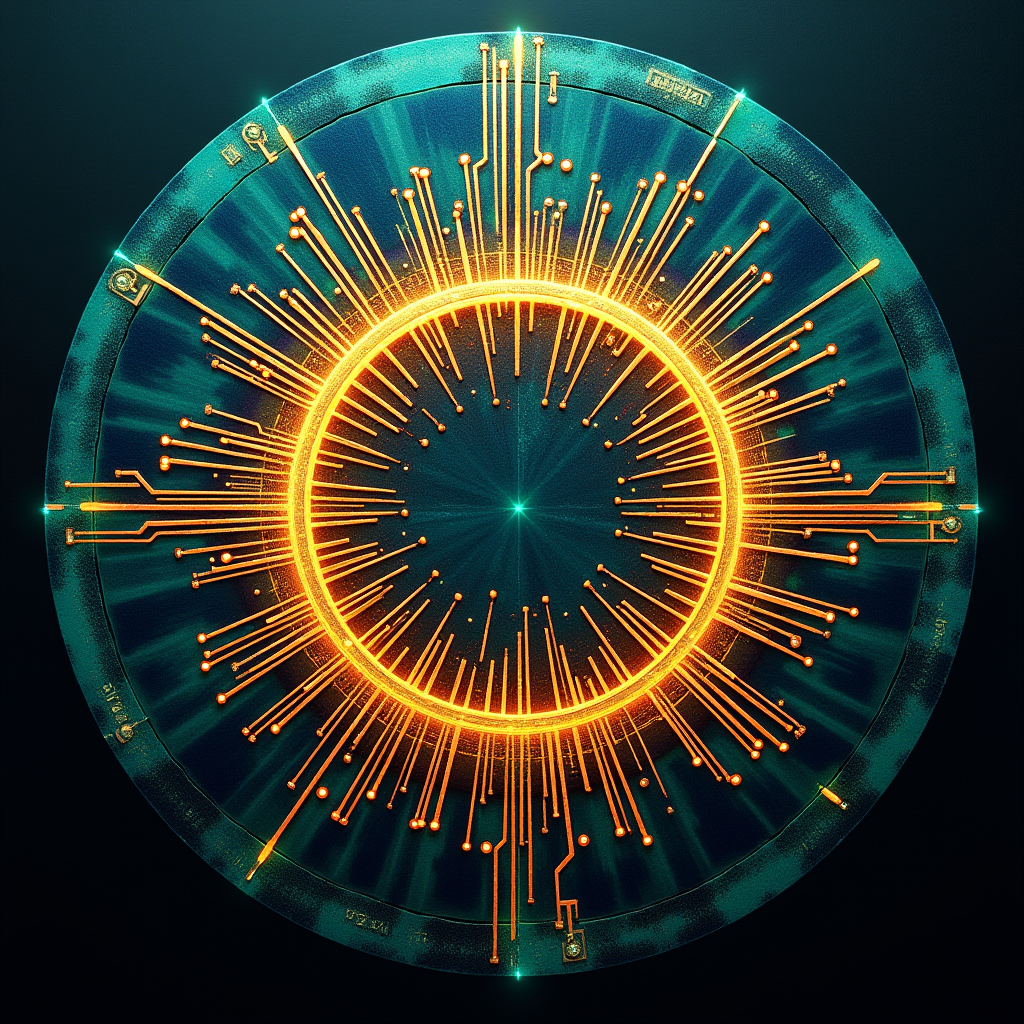
Traditional chip manufacturing is an exercise in cutting your losses. A silicon wafer — the round disk you see in photos of semiconductor factories — gets diced into hundreds of individual chips. Any die with a defect gets trashed. It’s like baking a giant cookie and throwing away the burnt pieces.
Cerebras flips the script entirely. Instead of cutting the wafer, they turn the entire 849mm² silicon wafer into one monolithic processor. The WSE-3 chip is 57 times larger than NVIDIA’s flagship GPU, contains 52 times more compute cores, packs 44GB of on-chip SRAM (880x more than a competing GPU), and delivers 21 petabytes per second of memory bandwidth — 7,000 times more than the alternative.

Think of it this way: NVIDIA’s GPU is like a sports car. Cerebras is building a mobile home and calling it a vehicle.
Why Size Actually Matters (Sometimes)
In AI computing, the hardest problem isn’t raw math — it’s moving data. Training a language model requires shuttling massive amounts of information between memory and compute cores. Every hop costs time and energy.
Cerebras’ approach solves this by keeping everything on one piece of silicon. The compute cores and memory are right next to each other because they are each other. No expensive, power-hungry interconnects. No waiting for data to travel across a circuit board. It’s the difference between grabbing something from your desk versus driving to a different building.
For specific workloads — particularly AI inference where you’re feeding millions of queries through a model and need low-latency responses — this architecture is genuinely impressive. Cerebras claims 10x faster output generation than GPU-based solutions on leading open-source models.

The $20 Billion Question: OpenAI’s Secret Weapon
Behind the IPO frenzy lies something more interesting than any stock metric. Cerebras signed a cooperation agreement with OpenAI worth over $20 billion — and as of late 2025, $24.6 billion in remaining performance obligations.
That kind of partnership is the holy grail for any AI hardware company. It means the biggest name in artificial intelligence is trusting Cerebras to power its models. But here’s the thing: long-term contracts are not revenue. They’re promises. Delivering, scaling, and hitting margins on a wafer-scale chip at that volume? That’s where most companies fall apart.
The Catch: Four Problems Nobody’s Ignoring
The hype machine is real. But the skeptics aren’t wrong either.
1. The memory bottleneck. The WSE-3 has 44GB of on-chip SRAM. NVIDIA’s B200 packs 192GB using High Bandwidth Memory (HBM). As models push toward million-token context windows, that gap matters. You can’t easily add more SRAM to a wafer-scale chip — it has to be designed in from the start.
2. Customer concentration. In 2024, a single customer (G42, an Abu Dhabi AI company) accounted for 85% of Cerebras’ revenue. In 2025, that dropped to 24%, but Mohamed bin Zayed University of AI still contributed 62%. That’s not diversification — that’s trading one dependency for another.

3. The CUDA moat. NVIDIA’s dominance isn’t just about chips. It’s CUDA — the software ecosystem that millions of developers know, love, and have built their entire careers around. Switching to Cerebras means rewriting code, retraining teams, and accepting uncertainty. The best chip in the world means nothing if nobody can use it.
4. Niche appeal. Davidson, an investment banking group that read the S-1, called the product “niche-y.” They’re not wrong. Wafer-scale chips excel at specific inference workloads. They’re not general-purpose accelerators. Cerebras isn’t trying to kill NVIDIA — it’s trying to carve out a profitable corner of the market NVIDIA hasn’t bothered defending.
What This Means for Everyone Else
If Cerebras succeeds — and there’s no reason to dismiss that possibility — the broader implications are fascinating. It proves that the GPU monopoly isn’t invincible. It shows that capital markets are hungry for real AI infrastructure innovation, not just another cloud company rebranded as “AI.”
But the real story might be simpler: the AI hardware war just got more interesting. NVIDIA’s 80%+ market share in AI accelerators is no longer unchallenged. Whether Cerebras can scale, diversify its customers, and deliver on those massive OpenAI obligations will determine if this IPO was the birth of a competitor or the peak of a very expensive bet.
Friday’s 10% drop was just the market saying: “Hold on, let’s see what you actually do.”
Quick Quiz
1. What makes Cerebras’ WSE-3 chip fundamentally different from a traditional GPU? Answer: It’s built from an entire silicon wafer as one monolithic processor, rather than cutting the wafer into many smaller chips. This gives it 57x the area, 52x more cores, and dramatically lower data movement overhead.
2. Why is the CUDA ecosystem a moat for NVIDIA, even if a competitor builds a faster chip? Answer: CUDA is NVIDIA’s software platform that millions of developers have built their work around. Switching costs — rewriting code, retraining teams, migrating tools — make even superior hardware hard to adopt.
3. What was the biggest red flag about Cerebras’ customer base going into the IPO? Answer: Extreme concentration — 85% of revenue came from one customer (G42) in 2024, and while that improved, a single university still accounted for 62% of 2025 revenue. That level of dependency makes revenue highly vulnerable to a single client’s budget decisions.
Watch the short