Cerebras Just Raised $5.6 Billion to Build a Chip Bigger Than NVIDIA's — Then the Market Said 'Hold On'
The biggest AI IPO ever opened +89% on day one, then immediately fell 10%. Here's what the Cerebras IPO really tells us about the AI chip war.
Cerebras Just Raised $5.6 Billion to Build a Chip Bigger Than NVIDIA’s — Then the Market Said ‘Hold On’
Imagine a startup selling a graphics card the size of a pizza to a world that only buys cards the size of a playing card. That’s the pitch Cerebras Systems made Wall Street on Thursday — and Wall Street ate it, then took it back by Friday.
If you blinked between Wednesday night and Saturday morning, you missed the biggest day in AI chip investing since NVIDIA first started trading. Cerebras Systems, a company most people had never heard of until this week, went public on the Nasdaq under the ticker CBRS, raised $5.6 billion in what’s now the largest AI IPO ever, and briefly gave its CEO and CTO a combined $5 billion in paper wealth.
Then the stock fell 10%. And the real story began.
The Chip That’s 58 Times Bigger Than a GPU
Here’s what Cerebras actually does. Most AI chips — NVIDIA’s H100, H200, and B200 GPUs — are built from smaller dies stitched together on a silicon package. It’s like building a mosaic from a thousand tiny tiles, with wires running between them that slow everything down.
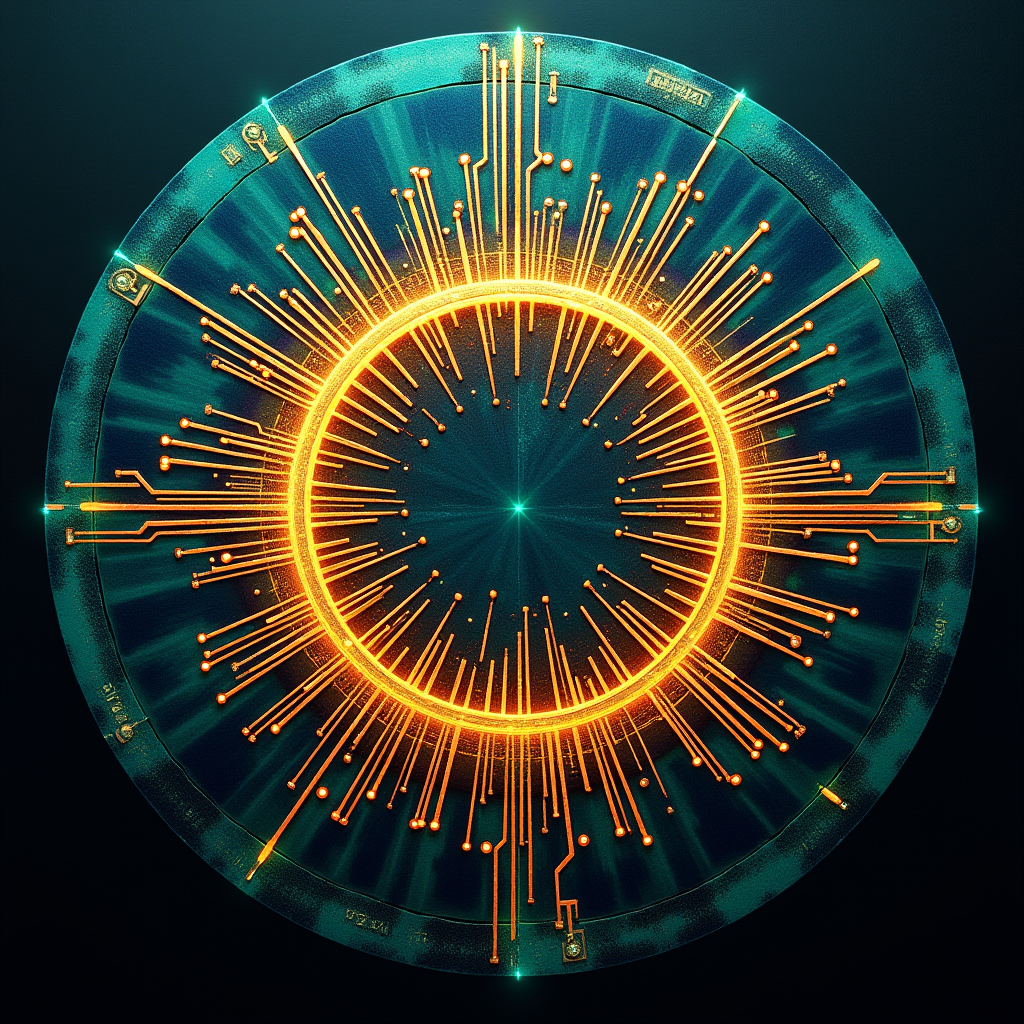
Cerebras takes a different approach entirely. Their Wafer Scale Engine 3 is a single chip built from an entire silicon wafer — the same circular disk from which hundreds of smaller chips are normally cut. Think of it like painting a mural on a wall instead of tiling a floor with tiny squares. The result is a processor 58 times larger than NVIDIA’s B200 GPU, with 2,625 times more memory bandwidth.
This isn’t just a bigger chip. It’s a different kind of computing. No interconnect bottlenecks. No communication lag between cores. Just one massive processor doing what massive processors do, without the plumbing overhead.
Cerebras focuses specifically on inference — the process of running trained AI models so they can actually respond to users. Not training (which is NVIDIA’s domain). Inference. And here’s the bet: as AI becomes ubiquitous, inference will dwarf training. Every chat, every search, every voice assistant request needs inference. Training happens once. Inference happens forever.

The IPO: A $5.6 Billion Opening Bell
Thursday’s IPO was a spectacle:
- IPO price: $185 per share
- Shares sold: 30 million
- Money raised: $5.55 billion (priced at $5.6B after upsizing)
- Opening: $185 — then the buying started
- Intraday peak: +89% above IPO price, briefly valuing Cerebras at $106.75 billion
- Closing: $331.07 per share (+68%), a market cap of about $95 billion
- CEO Andrew Feldman: became a $3.2 billion billionaire
- CTO Sean Lie: became a $1.7 billion billionaire
The largest tech IPO since Uber in 2019. The largest AI IPO ever. NVIDIA would probably have something to say about that title if asked.
The Morning-After Hangover
Friday told a different story. Cerebras stock fell 10% on its first full day of trading. The +89% opening had been the real story — a classic IPO pop that reflected pent-up demand for any AI-related equity, not necessarily a sustainable valuation.
This pattern has a name. The “IPO pop” happens when early investors, underwriters, and hype combine to drive a stock way above its IPO price on day one. Then reality sets in, and the market starts asking the hard questions.
Those questions include:

- Is wafer-scale computing actually useful at scale, or is it a brilliant lab demo? Davidson analysts called the product “niche-y” and said the Wafer Scale Engine is still in “early stages of maturity.”
- Can Cerebras compete with NVIDIA’s ecosystem? NVIDIA doesn’t just make chips. It has CUDA, a software platform that millions of developers depend on. Cerebras has impressive hardware but faces an enormous software moat.
- At $95 billion, is Cerebras priced for perfection? The market has been generous to AI hype before, but it’s also been unforgiving. The stock fell 10% in 24 hours.
- Inference vs. training — will Cerebras’s niche survive? If NVIDIA can match the performance gains, Cerebras’s entire value proposition narrows dramatically.
What This Means for the AI Chip War
The Cerebras IPO is significant not just for the money raised, but for what it signals about the AI infrastructure market.
First, the chip war is accelerating beyond NVIDIA. The market is now willing to bet hundreds of billions on alternatives. Whether Cerebras wins or loses, its IPO validates the idea that NVIDIA can be challenged at the hardware level — which means more competition, more innovation, and potentially better deals for AI companies buying infrastructure.
Second, wafer-scale computing is no longer science fiction. It’s a Nasdaq-listed reality. Whether Cerebras’s approach becomes the dominant paradigm or a fascinating footnote, it proves the concept works and will push every competitor (including Intel, AMD, and NVIDIA) to think bigger about chip architecture.
Third, the market’s two-day reaction tells us something important. The +68% day-one pop shows that investors are hungry for AI infrastructure plays. The 10% drop the next day shows they’re not completely dumb. The stock that emerges from this volatility could be very different from either the opening price or the Friday close.
The Bottom Line
Cerebras proved one thing beyond doubt: the world still believes in hardware-level AI innovation. Even after years of hype, even after every startup claims “we’re the next NVIDIA,” the market responded to a real chip, real performance claims, and real engineering.

The question now isn’t whether wafer-scale computing works. It’s whether anyone besides Cerebras can scale it, whether customers will migrate away from CUDA, and whether a stock that popped 68% then dropped 10% has found its true price.
For now, Cerebras is the biggest name in AI chips that nobody knew existed two weeks ago. That’s either a great problem to have or the setup for a very expensive correction. Only time will tell.
Quick Quiz
1. What makes Cerebras’ Wafer Scale Engine 3 fundamentally different from a traditional GPU like NVIDIA’s B200?
A) It uses quantum computing principles B) It’s built from an entire silicon wafer instead of smaller diced chips C) It runs exclusively on liquid helium D) It requires no electricity, only light
2. How much money did Cerebras raise in its IPO?

A) $1.2 billion B) $3.4 billion C) $5.6 billion D) $8.9 billion
3. On its first full day of trading (Friday, May 15), what happened to Cerebras’ stock?
A) It rose another 15% B) It stayed flat C) It fell 10% D) It was halted for the day
Answers: 1-B, 2-C, 3-C
Sources: Reuters (May 14, 2026), CNBC (May 15, 2026), Renaissance Capital IPO Weekly Recap, Seeking Alpha analysis, Cerebras Systems S1 prospectus.
Watch the short