
The Next 6 Months of AI: What's Coming From Now to November
GPT-5.6, Claude 5, Grok 5, and the agentic revolution — a practical forecast for the rest of 2026.
The Next 6 Months of AI: What’s Coming From Now to November
We’re sitting at one of those inflection points that only show up once a decade.
GPT-5.5 just launched in April. Claude Opus 4.7 is already shipping. Grok 5 is in beta. The foundation models that defined 2025 are no longer the frontier — they’re the baseline.
So what happens between now and November? Not another wave of demos and keynotes. Something more consequential: the shift from AI as a tool you use to AI as a colleague you manage.
Here’s what the next 6 months actually look like.
1. The Model Arms Race Accelerates (June–July)
GPT-5.5 gave OpenAI back its #1 ranking after Claude ate its lunch earlier this year. But they won’t let it stand.
GPT-5.6 is expected mid-2026 and will likely focus on reducing latency and expanding the context window beyond the 2M tokens GPT-5.5 already offers. The real story isn’t raw benchmark numbers — it’s cost-per-token. The labs are racing to deliver frontier performance at 1/10th the inference cost, because nobody can sustain their current GPU burn forever.
Anthropic is preparing Claude 5 (not 4.8, not Opus 4.8 — a full version 5). The leap here is expected to be in long-context reasoning: Claude has been eating the world’s attention span, and Claude 5 will be the first model to genuinely handle a 4 million token context without losing its place. Think: feed it your entire codebase, legal docs, and research library simultaneously, and actually get coherent answers.
Google’s Gemini 3.2 will round out the triad, pushing harder on multimodal native capability and cost-optimized tiers for enterprises watching their cloud bills.
The pattern is clear: 2025 was about can the model do it? 2026 is about can it do it cheaply, at scale, and reliably?

2. Agentic AI Goes From Pilot to Production
If 2025 was the year AI agents became a buzzword, the summer of 2026 is when they stop being a slide deck and start being a payroll line item.
The three things separating today’s agents from tomorrow’s are:
Persistent memory. Agents that remember context across sessions, weeks, even months. No more re-explaining your project every time you open a new chat. This is already shipping in enterprise tools, and consumer-facing agents will catch up by fall.
Tool orchestration. Not just “search the web” — but the ability to navigate complex multi-step workflows: query a database, format results, call an external API, write a summary, and email it to a stakeholder. All in one go. No human in the loop unless something breaks.
Verifiable output. The industry has moved from monolithic generative models to pipelines with generators, verifiers, and fact-checkers. Hallucination rates are dropping fast because the architecture itself now includes a “check your work” step.
Microsoft’s leadership puts it bluntly: 2026 is when AI agents become “digital coworkers.” A three-person team launching a global campaign in days instead of months. That’s not aspirational — it’s happening in companies that shipped agents into production in Q1.
The caveat? Security. Every agent needs the same identity management and access controls as a human employee. As Microsoft Security’s Vasu Jakkal put it: “Every agent should have similar security protections as humans — to ensure agents don’t turn into ‘double agents’ carrying unchecked risk.” This is the unsexy bottleneck that will determine which companies successfully deploy agents and which get burned.
3. AI Factories: The Enterprise Playbook Solidifies
MIT Sloan’s Davenport and Bean identified this trend clearly: the companies that will win aren’t buying more AI tools — they’re building AI factories.
An AI factory is a combination of technology platforms, methods, data pipelines, and previously developed algorithms that make it fast and easy to build and deploy AI systems internally. Think of it like a CI/CD pipeline but for AI: version control for models, automated testing, standardized data schemas, and reusable components.
Procter & Gamble and JPMorgan Chase pioneered this with analytical AI. Now the movement is spreading to every industry — consumer goods, healthcare, manufacturing, logistics. The ones building factories in H1 2026 will have a two-year head start on everyone else.
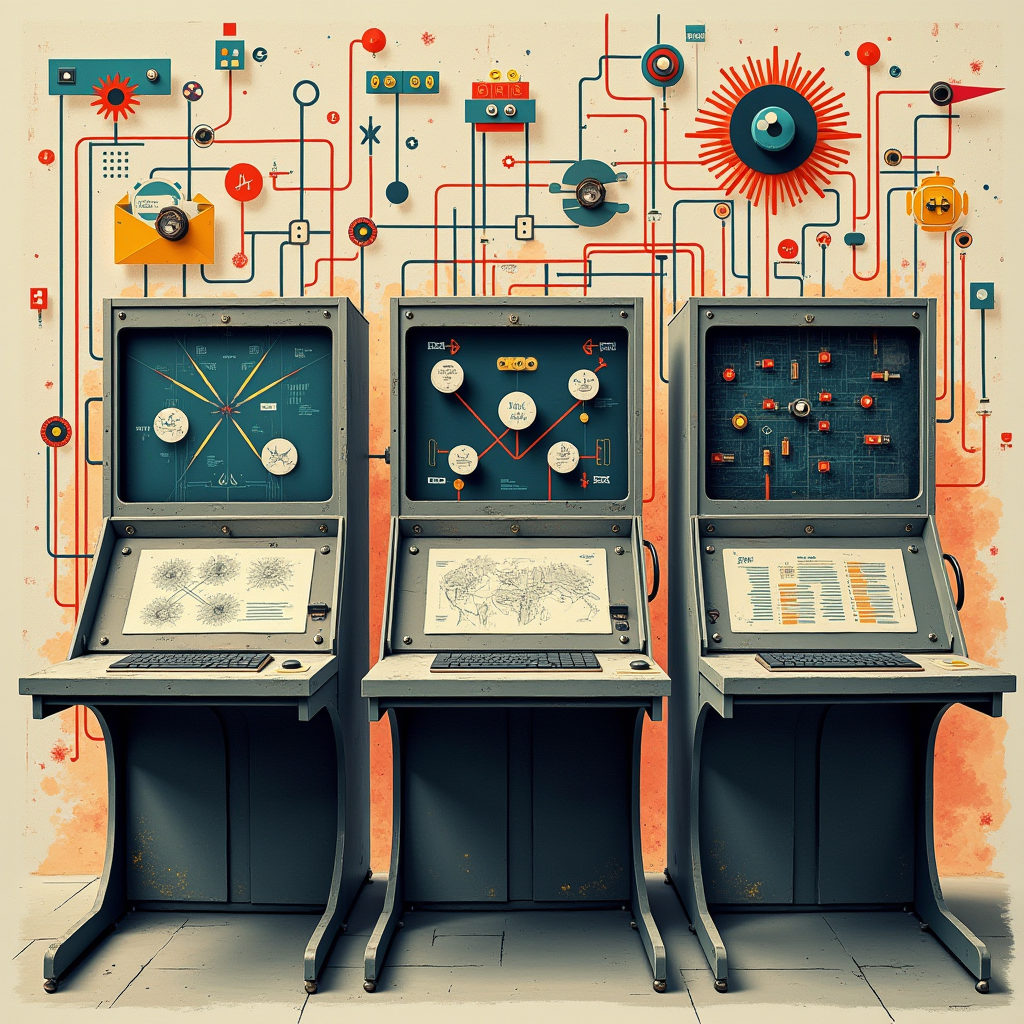
The signal to watch: companies that announce internal model fine-tuning pipelines, not just API integrations. Building your own model layer on top of foundation models is becoming the standard enterprise pattern.
4. AI in Science: From Reading Papers to Running Labs
Peter Lee, Microsoft Research president, put it this way: in 2026, AI won’t just summarize papers and answer questions — it will “actively join the process of discovery.”
The jump is real. AI agents are already being deployed to:
- Generate hypotheses from literature reviews
- Control robotic lab equipment to run experiments
- Collaborate with both human and AI research colleagues
- Suggest new experiments based on results
This matters especially in drug discovery, materials science, and climate modeling. The WHO projects a shortage of 11 million health workers by 2030 — AI-assisted research is not just a nice-to-have, it’s an infrastructure necessity.
Microsoft’s Diagnostic Orchestrator (MAI-DxO) already solved complex medical cases with 85.5% accuracy — far above the 20% average for experienced physicians. That was demonstrated in 2025. By November, this kind of capability will be reaching patients, not just research labs.
5. Multimodal Becomes the Default, Not a Feature
This is the trend nobody talks about because it’s already so ubiquitous that it stopped being noteworthy.
Every new model release this half-year will be multimodal by default: text, image, audio, and video processed natively in a single architecture. Not “text + vision” bolted on — truly unified. This means:
- You can show an agent a screenshot, a voice note, and a PDF, and it will understand the relationships between them.
- Video understanding is no longer a research project — it’s a shipping feature.
- The boundary between “chat” and “experience” keeps dissolving.

GPT-5.4’s unified reasoning engine already streamlined complex multimodal tasks. The next generation will make this invisible — you won’t think “this model is multimodal,” you’ll just think “this thing works.”
6. The Bubble Question
We need to address it.
MIT Sloan’s Davenport and Bean predict the AI bubble will deflate in 2026 — probably gradually. They compare it to the dot-com crash: sky-high valuations, emphasis on growth over profit, expensive infrastructure buildout.
But unlike the dot-com crash, the underlying technology is transformative. The difference is the pricing. The market has overestimated near-term impact and is underestimating the timeline for real integration.
What this means for the next 6 months: expect consolidation. Smaller AI startups that can’t demonstrate clear revenue paths will face funding pressure. The labs that built the most expensive data centers will be forced to justify their spending with real enterprise adoption, not just hype.
The good news? A slow deflation is better than a burst. It gives companies time to absorb what they’ve already invested in and focus on building actual value.
7. Edge AI: Your Phone Becomes a Computer
While the frontier labs race for bigger models, a parallel revolution is happening on your device.
Local AI inference is improving fast — thanks to model compression techniques (quantization, distillation, pruning) and dedicated AI silicon in phones, laptops, and even IoT devices. By fall 2026, you’ll be able to run meaningful AI tasks entirely on-device:
- Real-time translation without internet
- Personalized assistants that never leave your device
- Private document analysis without sending data to a cloud API

Apple’s Gemini integration, Qualcomm’s new AI chips, and Apple Silicon’s ongoing improvements all point to the same direction: the best AI won’t always be the biggest AI — it’ll be the one that’s always available, always private, and always on.
What This Means for You
Three takeaways:
If you’re a developer: Stop treating AI as a chatbot and start treating it as an agent you architect for. Learn tool orchestration, agent security, and the new evaluation frameworks for multi-step workflows. That’s where the jobs are.
If you’re a business leader: Build your AI factory. Not another pilot project — actual infrastructure. The companies that treat AI as a one-off tool will be left behind by companies that treat it as a capability layer.
If you’re just curious: The next 6 months will feel quieter than 2025. Fewer “breakthrough” announcements. More shipping, more integration, more boring-but-powerful stuff. That’s actually a good sign.
We’re past the age of wonder. We’re in the age of building.
And that’s when the real story begins.
Published May 16, 2026. Sources: Microsoft Research, MIT Sloan Management Review, Stanford AI Index 2026, Anthropic, OpenAI, Google DeepMind, Gartner Hype Cycle, Menlo Ventures State of Generative AI in the Enterprise.
Watch the short