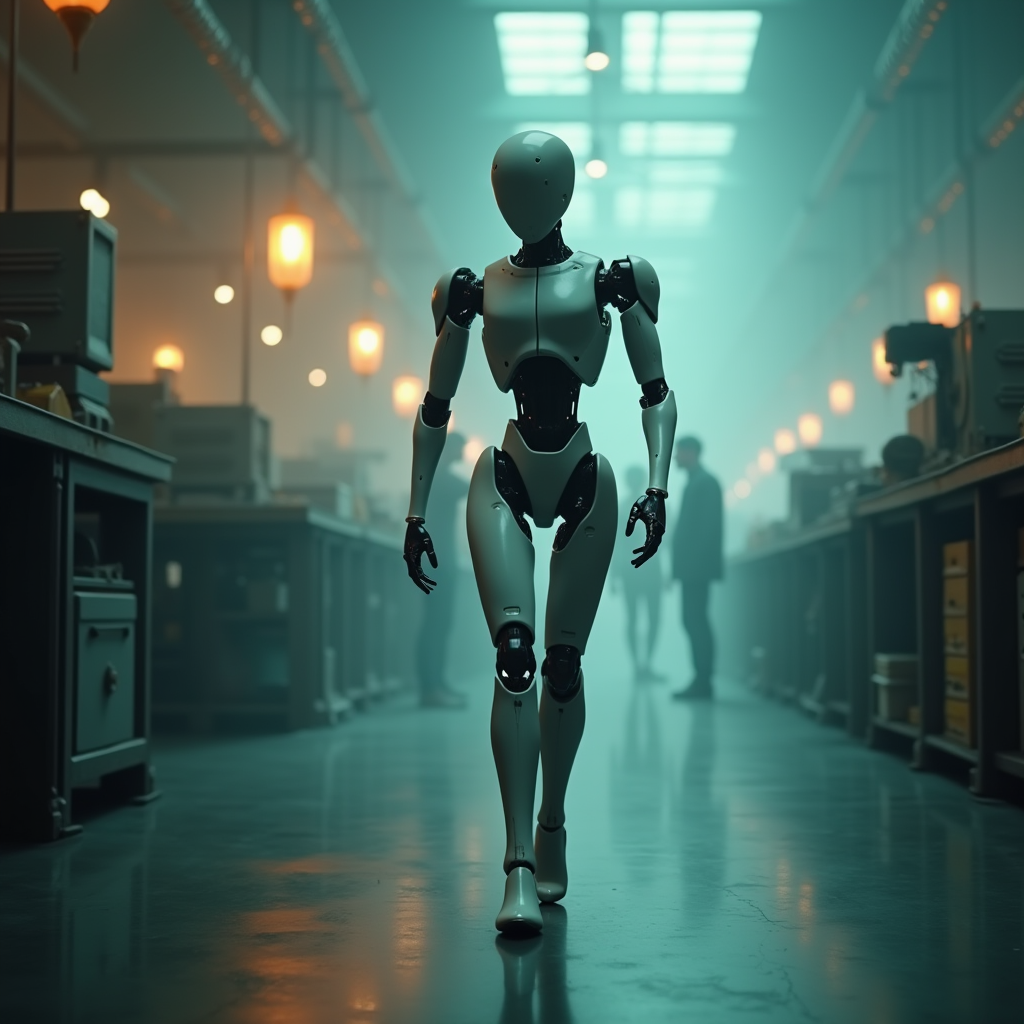
What Is Gemini Robotics 2? Whole-Body Intelligence Explained
Learn how Google DeepMind's Gemini Robotics 2 unifies perception, planning, and action to give humanoid robots true whole-body intelligence.
What Is Gemini Robotics 2? Whole-Body Intelligence Explained
Imagine trying to learn how to untie a knot versus how to tie one. Untying is forgiving; you can pull, twist, and adjust, and the knot eventually gives way. Tying it requires precise finger placement, exact tension, and perfect alignment the moment your fingers make contact. That asymmetry is exactly what Google DeepMind is wrestling with in physical AI. On July 30, 2026, the lab unveiled Gemini Robotics 2, a software architecture designed to give humanoid machines a unified brain. Instead of treating a robot’s legs, arms, and grippers as separate problems, the system attempts to coordinate everything from the ground up. But behind the polished demos lies a much messier reality: the system is still slow, the hardware access is restricted, and the gap between what it can easily remove and what it struggles to insert reveals the true frontier of robotic dexterity.
What is Gemini Robotics 2, and what changed from the first version?
Gemini Robotics 2 is not a single product sitting on a shelf. It is a three-part software stack introduced by Google DeepMind to solve a persistent bottleneck in robotics: the inability of machines to seamlessly switch between moving their bodies and manipulating objects. The first version was largely confined to upper-body manipulation. If you asked a v1 robot to walk across a room, place an object on a shelf, and then return to its charging station, it would likely fail at one of those steps because the control systems were siloed. v2 changes that by unifying perception, language, and action into a single pipeline.
The architecture breaks down into three specialized models that work together:
| Model | Job | Why it exists |
|---|---|---|
| Gemini Robotics 2 (VLA) | Vision-Language-Action — turns what the robot sees and hears into motor commands | The “doing” layer; removes hand-coded perception-to-joint translation |
| Gemini Robotics ER 2 | Reasoning and planning across multi-step jobs | The “thinking” layer; decides the sequence before anything moves |
| Gemini Robotics On-Device 2 | Runs locally on the robot’s own silicon | Factories and remote sites have poor connectivity; no cloud round-trip |
That split matters more than it looks. Most coverage describes Gemini Robotics 2 as “a robot brain,” singular — but the reason it can both plan a multi-step errand and keep its balance mid-reach is that planning and control are different models operating at different speeds. ER 2 can afford to deliberate; the VLA cannot, because balance is a continuous problem. On-Device 2 exists because a robot that loses Wi-Fi mid-crouch is a hazard, not an inconvenience.
Beyond the internal architecture, v2 introduces multi-robot collaboration, a capability that did not exist in the earlier release. Where v1 operated as a solitary actor, v2 can coordinate tasks across multiple units, allowing them to share spatial awareness and divide labor in real time. This shift marks a deliberate pivot from isolated manipulation to coordinated, full-environment operation. The goal is no longer just to make a robot’s hands smarter; it is to make the entire machine behave as a single, adaptive entity.
What does “whole-body intelligence” actually mean?
When engineers say “whole-body intelligence,” they are not talking about a robot that suddenly develops consciousness or philosophical awareness. The term describes a specific technical integration: the ability to treat locomotion, balance, posture, and manipulation as one continuous control problem rather than a series of disconnected scripts. In older systems, a robot would use one algorithm to keep its center of mass stable, a second to plan a trajectory for its arm, and a third to coordinate finger movements. These systems often conflicted, causing the robot to freeze or topple when trying to do two things at once.
Gemini Robotics 2 flattens that hierarchy. By feeding the same sensory data into a unified policy, the model learns how shifting your weight to the left affects your grip strength, or how crouching down changes the angle required to pick up a lightweight object. The system coordinates “feet to fingertips,” meaning it can walk across a room, crouch to reach a low shelf, stretch to grab an item, and stand back up without ever switching control modules. This is what brings a new level of fluidity to humanoid machines. You are no longer programming a robot to execute a sequence of isolated commands; you are giving it a physical intuition for how its entire body interacts with space.

The intelligence here is grounded in physics rather than abstract reasoning. It does not possess common sense or human-level autonomy. Instead, it relies on learned whole-body policies that map environmental inputs to motor outputs across the entire kinematic chain. When the system says it has “whole-body intelligence,” it means the robot’s brain no longer treats its legs as separate hardware from its arms. They are controlled as one integrated machine, which is a massive leap forward for physical AI.
How is this different from a normal robot control system?
Traditional industrial and research robots rely on highly engineered, hand-coded control stacks. Engineers spend years writing proprietary software that tells a joint exactly how much torque to apply, how fast to move, and when to stop. These systems are incredibly precise for repetitive, factory-floor tasks, but they are brittle. Change the environment, introduce an unexpected object, or ask the robot to adapt to a new surface, and the carefully tuned code often breaks. The “glue logic” that connects perception to action is manually programmed, which means every new task requires a new patch of code.
Gemini Robotics 2 replaces that brittle scaffolding with learned policies. Instead of hand-coding the rules for how a humanoid should balance while reaching, the system trains on vast datasets of human and synthetic movement, learning to predict the right motor commands through trial and error. This is a fundamental architectural breakthrough. The VLA model directly converts what the robot sees and hears into action, bypassing the need for engineers to manually translate visual data into joint coordinates.
This shift also changes how humans interact with the machines. You do not need to write a script to tell the robot to “seal a Ziploc bag.” You simply give it a natural language instruction, and the model figures out the sequence of gripper movements, wrist rotations, and finger pressures required to complete the task. It brings a level of adaptability that traditional control systems simply cannot match. Where a normal robot control system requires you to teach the machine every possible variation of a task, Gemini Robotics 2 generalizes from experience. It learns the underlying physics of manipulation rather than memorizing a fixed set of moves.
What can it do that earlier robots could not?
The most visible proof of v2’s capabilities came during its public demonstration featuring the Apptronik Apollo 2 humanoid. In the demo, the robot was given a straightforward instruction: put the watering can into the green bin on the bottom shelf. A v1 robot would have struggled to execute this as a single, continuous task. It might have walked to the bin, stopped, recalibrated, reached for the can, and then failed to place it correctly because its balance shifted. Gemini Robotics 2 handled the entire sequence fluidly. It navigated the room, adjusted its posture to reach downward, grasped the object, and placed it accurately without breaking its physical continuity.
Beyond navigation and placement, the system has been demonstrated handling fine manipulation tasks that previously required specialized, task-specific hardware. It can seal a Ziploc bag, tie trash bags securely, and even perform knot-tying routines. These are not just locomotion demos; they are dexterity tests. The robot adapts its grip pressure, coordinates finger independence, and adjusts its stance to maintain stability while its hands perform delicate work.

Perhaps most importantly, v2 introduces multi-robot collaboration, allowing multiple units to operate in the same space without colliding or duplicating effort. Earlier systems could not reliably share spatial context or coordinate simultaneous actions. Now, a team of robots can divide a workspace, pass objects between each other, and adapt to each other’s movements in real time. This moves physical AI out of the realm of single-unit novelty and into the territory of practical, coordinated labor. The system does not just control one body; it orchestrates multiple bodies working toward a shared objective.
Which robots and hardware does it actually run on?
It is important to clarify what Gemini Robotics 2 is not: it is not a consumer product, nor is it a proprietary robot that Google manufactures and sells. The system is a software platform designed to run on partner hardware, with the Apptronik Apollo 2 serving as the primary demonstration unit. Google DeepMind has made the architecture accessible to early partners and developers, allowing them to integrate the stack into their own humanoid and robotic platforms.
The On-Device 2 model specifically addresses hardware constraints. Industrial environments, warehouses, and remote facilities often operate on isolated networks or legacy infrastructure with limited bandwidth. By compressing and optimizing the model for local silicon, the system can run entirely on the robot’s onboard compute without relying on cloud servers. This means the hardware requirements are flexible but demanding; the robot needs sufficient processing power, stable power delivery, and compatible actuator interfaces to run the model in real time.
Because the platform is still in early access, it is not available to the general public or small businesses looking to buy a ready-to-use robot. Access is restricted to research partners, enterprise developers, and organizations with the technical capacity to integrate and maintain the system. Google is not shipping consumer robots, and there is no timeline for a mass-market rollout. The focus right now is on building a robust, cross-platform foundation that other manufacturers can adapt. If you are waiting to buy a Gemini Robotics 2 robot off a retail shelf, you will be waiting a long time. The technology is being stress-tested in controlled environments, with hardware partnerships expanding gradually as the software matures.
What are the real limits, and what is still unsolved?
The gap between viral demos and actual performance is where Gemini Robotics 2 reveals its true limitations. The system’s widely cited success rate sits at 92%, but that number only tells half the story. That 92% applies specifically to unscrewing a light bulb—a task that is mechanically forgiving. Removing a bulb requires minimal precision; you can apply inconsistent torque, shift your grip slightly, and the bulb will eventually loosen.
Screw the bulb back in, and the success rate drops to 36%. The difference is physics, not intelligence. Insertion requires precise force alignment, consistent pressure, and exact rotational coordination the moment your grippers make contact with the threads. Tolerance for error vanishes.
Put the official numbers side by side and the pattern is hard to miss:

| Task | Success rate | What it demands |
|---|---|---|
| Unscrewing a lightbulb (the widely-quoted demo) | 92% | Removal — error-tolerant |
| Picking an object off the ground | 45.7% | Approach under shifting balance |
| Sealing a zipper bag | 40% | Sustained even pressure along a seam |
| Screwing a lightbulb in | 36% | Insertion — near-zero tolerance |
Same robot, same model, same lightbulb. The number that travelled was the best one. That is not a scandal — DeepMind published the rest — but it is the reason a demo reel and a benchmark table leave you with completely different impressions of where robotics actually is. The system is slow, it hesitates in contact-rich scenarios, and DeepMind itself describes true dexterity as a distant goal.
The model also lacks the ability to reason through novel physical constraints that fall outside its training distribution. If you place a slippery, irregularly shaped object in an unpredictable position, the system may misjudge its grip or lose balance. It does not possess human-level autonomy or common sense. It operates within the boundaries of its training data, and when pushed beyond those boundaries, it defaults to cautious, suboptimal movements. The architecture is brilliant at generalization within known parameters, but it is not a magic solution to the complexity of unstructured physical environments.
The Catches
Behind the polished announcements and successful demos, several structural and practical limitations define the current state of Gemini Robotics 2. First, the system is computationally heavy and slow. Even with the On-Device 2 optimization, inference times lag behind the real-time reflexes required for truly fluid manipulation. The robot does not move with the instant adaptability of a human; it calculates, predicts, and executes with noticeable latency.
Second, access remains tightly controlled. The platform is not available for commercial deployment or consumer use. Early partners and developers get to test it, but scaling it across different hardware architectures requires significant engineering overhead. Google is not shipping consumer robots, and there is no announced release date for a public or retail product.
Third, the benchmark tension between removal and insertion tasks reveals a fundamental gap in contact-rich manipulation. The model handles non-contact or low-friction tasks well, but as soon as physical resistance, alignment, and precise force modulation are required, performance degrades sharply. This is not a software bug; it is a reflection of how difficult it is for learned policies to master the physics of tight tolerance assembly. Until the system can reliably screw things in, pick objects off uneven ground, and seal bags without hesitation, it remains a research-grade platform rather than a finished product. The catches are not failures of ambition; they are the actual boundaries of current physical AI.
How to use the term correctly
“Whole-body intelligence” is new enough that it is already being stretched, so it is worth pinning down while the meaning is still settling.
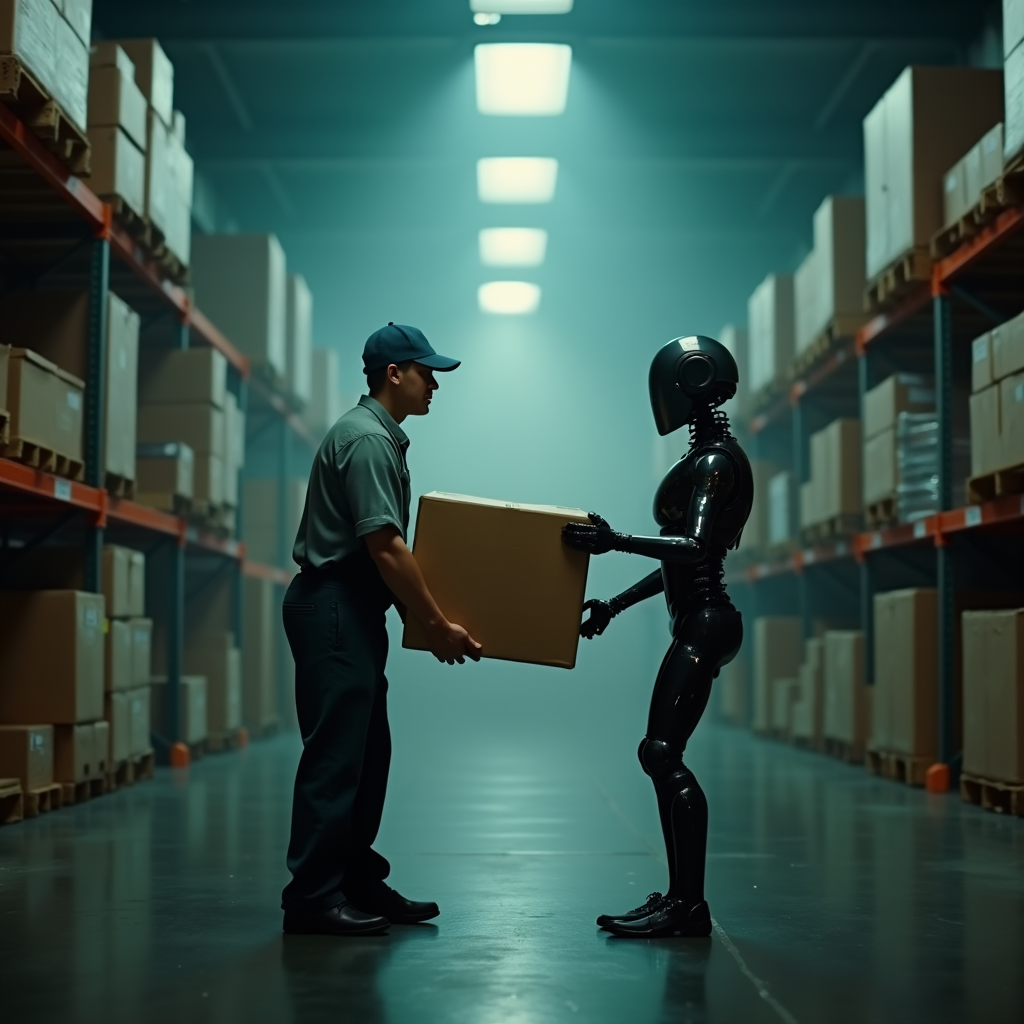
It does mean: locomotion, balance, posture and manipulation solved as one control problem, by one learned policy, across the whole kinematic chain — feet to fingertips.
It does not mean: a smarter robot in the general sense, consciousness, common sense, or human-level autonomy. It is not a synonym for “humanoid,” and it is not a product you can buy.
The quickest test: if a claim would still be true when the robot is standing perfectly still, it probably is not about whole-body intelligence. The term is specifically about what happens when moving and manipulating stop being separable — when crouching changes your grip, and gripping changes your balance. A robot with excellent hands and a separate walking controller is not doing this, however capable it looks in a clip.
That distinction is going to matter over the next year, because every humanoid demo will be described this way whether or not the underlying control is unified.
Closing
Gemini Robotics 2 does not hand you a ready-made robot that walks, talks, and works like a human. It hands you a new way of thinking about robotic control, proving that unifying perception, language, and motor output across the entire body is possible. The 56-point gap between unscrewing and screwing in a bulb is not a setback; it is a map. It shows exactly where the next wave of research must go, and it proves that the path to true dexterity runs through the messy, contact-rich physics we have been avoiding. The foundation is laid. Now comes the hard part.
Sources
- Google DeepMind — https://deepmind.google/blog/gemini-robotics-2-brings-whole-body-intelligence-to-robots/
- Google DeepMind — https://deepmind.google/models/gemini-robotics/
- Engadget — https://www.engadget.com/2227268/google-gemini-robotics-2-platform-intelligent-whole-body-control/
- The Robot Report — https://www.therobotreport.com/google-deepmind-says-gemini-robotics-2-enables-full-body-control/
- MarkTechPost — https://www.marktechpost.com/2026/07/30/google-deepmind-gemini-robotics-2-whole-body-control-dexterity-multi-robot-collaboration/
- Robotics & Automation News — https://roboticsandautomationnews.com/2026/07/31/google-deepmind-unveils-gemini-robotics-2-as-apptronik-humanoid-demonstrates-whole-body-ai/103802/
- The Next Web — https://thenextweb.com/news/gemini-robotics-2-whole-body-humanoid-control
- Humanoids Daily — https://www.humanoidsdaily.com/news/google-deepmind-unveils-gemini-robotics-2-bringing-whole-body-intelligence-and-multi-robot-teams-to-physical-ai
- YouTube — Introducing Gemini Robotics 2
- YouTube — Google Unveils Gemini Robotics 2 for Smarter Humanoid Machines | WION Podcast
- YouTube — Gemini Robotics 2 Explained: AI That Controls Full Robots #GeminiRobotics
- YouTube — Gemini Robotics 2: Hype or Real Robot Breakthrough?
- YouTube — Google DeepMind Unveils Gemini Robotics 2 for Whole-Body AI Robot Control Amid D
- YouTube — Gemini Robotics 2: Whole-Body Robot Control
- YouTube — Gemini Robotics 2 EXPLAINED | Whole Body Intelligence & Humanoid AI Breakthrough
- YouTube — Gemini Robotics 2 Brings Whole Body Intelligence, But At What Cost?
Watch the full lesson