
AI Learner #9: RAG — How Models Look Things Up
LLMs know a lot of stuff — but not your stuff, and not stuff that happened after they were trained. RAG solves that by letting models look things up before they answer.
AI Learner #9: RAG — How Models Look Things Up
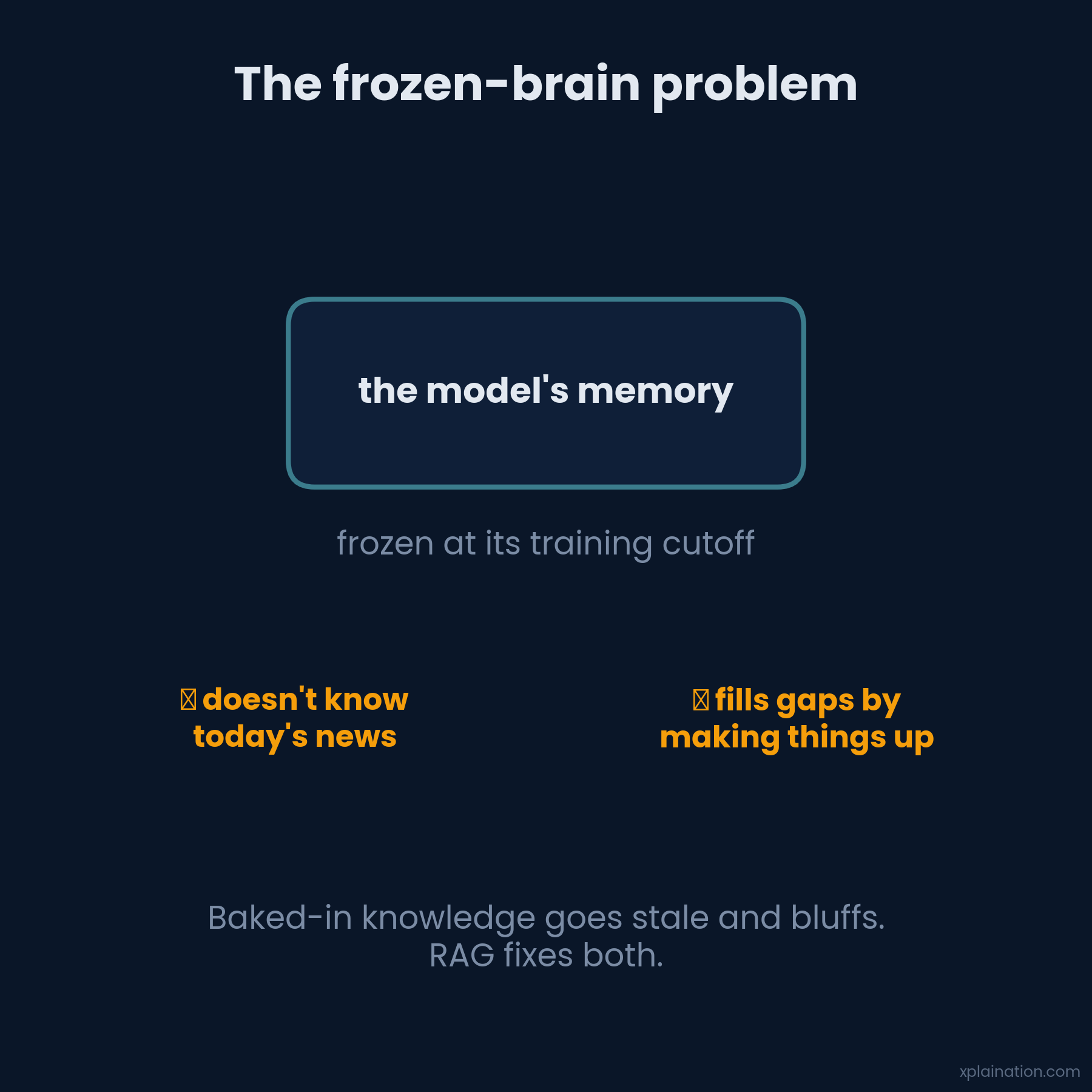
A model’s knowledge freezes the day its training ends. Ask about something newer — or about your own private documents — and it has two options: admit it doesn’t know, or confidently invent something.
It almost always picks “invent something.” That’s a hallucination, and it’s baked right into how these models work.
The RAG Pipeline: Fetch, Augment, Generate
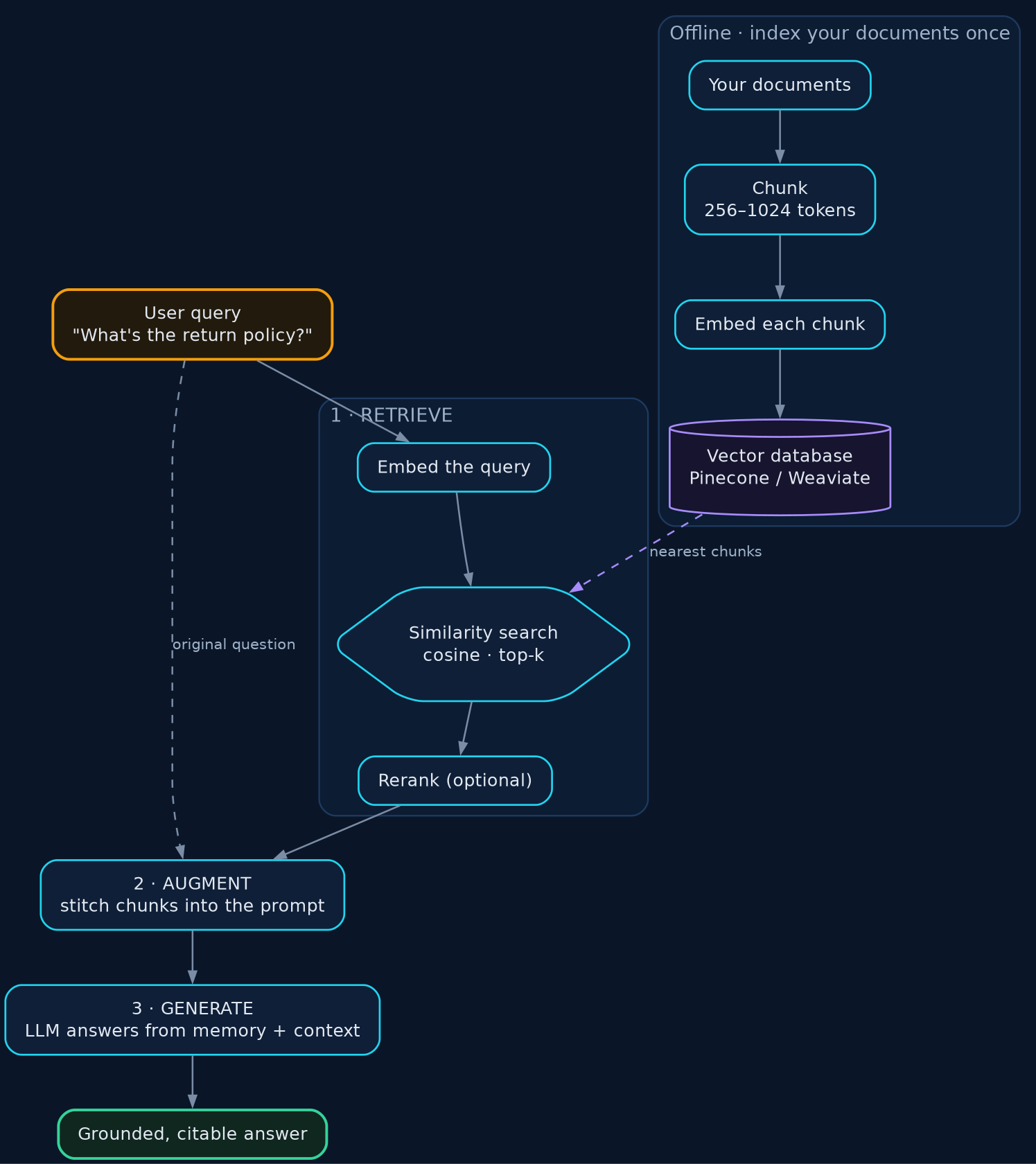
RAG — retrieval-augmented generation — fixes this with a beautifully obvious idea: before answering, go look it up.
Step 1: Retrieve
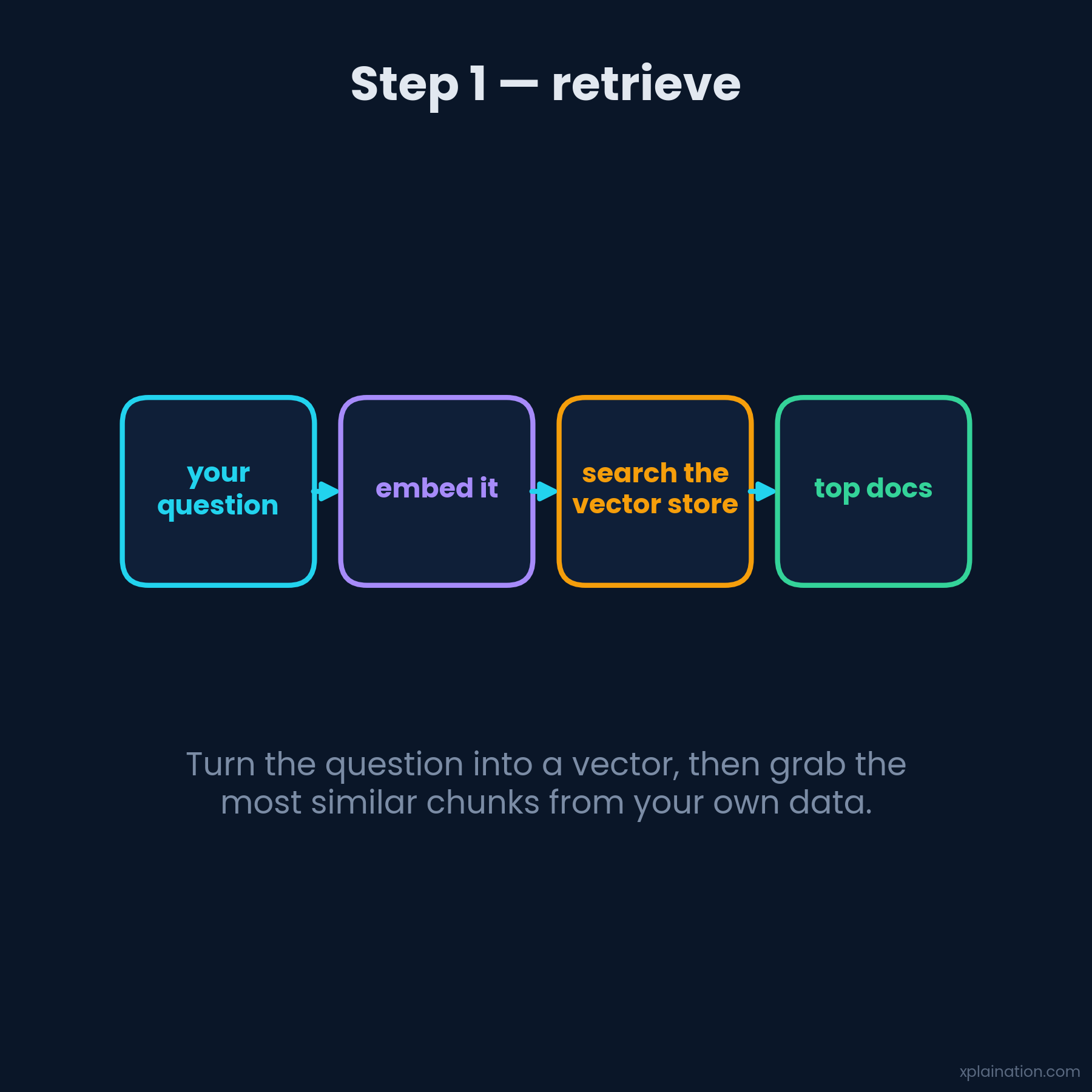
Turn your question into a vector (an embedding), then search a store of your own documents for the chunks most similar to it. That “store” is usually a vector database.
Steps 2 & 3: Augment and Generate
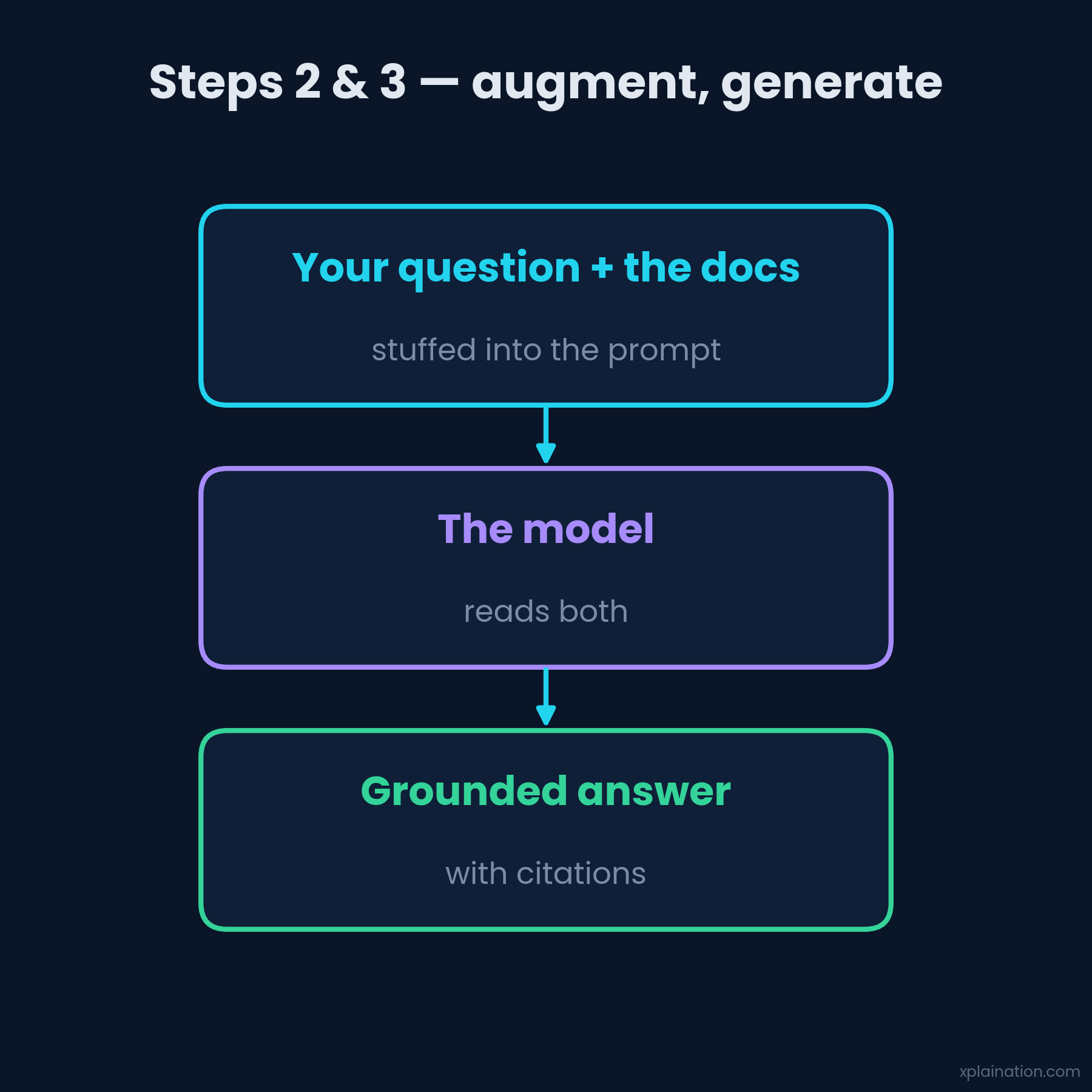
Paste those retrieved chunks into the prompt, and let the model answer using them — often with citations you can actually check. The payoff is huge: answers grounded in real, current, private data, and far fewer confident fabrications. Update the documents and the model’s knowledge updates instantly.
The Tradeoffs
It isn’t free. Retrieve the wrong chunks and you’ve just handed the model wrong context — garbage in, very confident garbage out. Retrieval quality is the whole ballgame.
RAG vs. Fine-Tuning
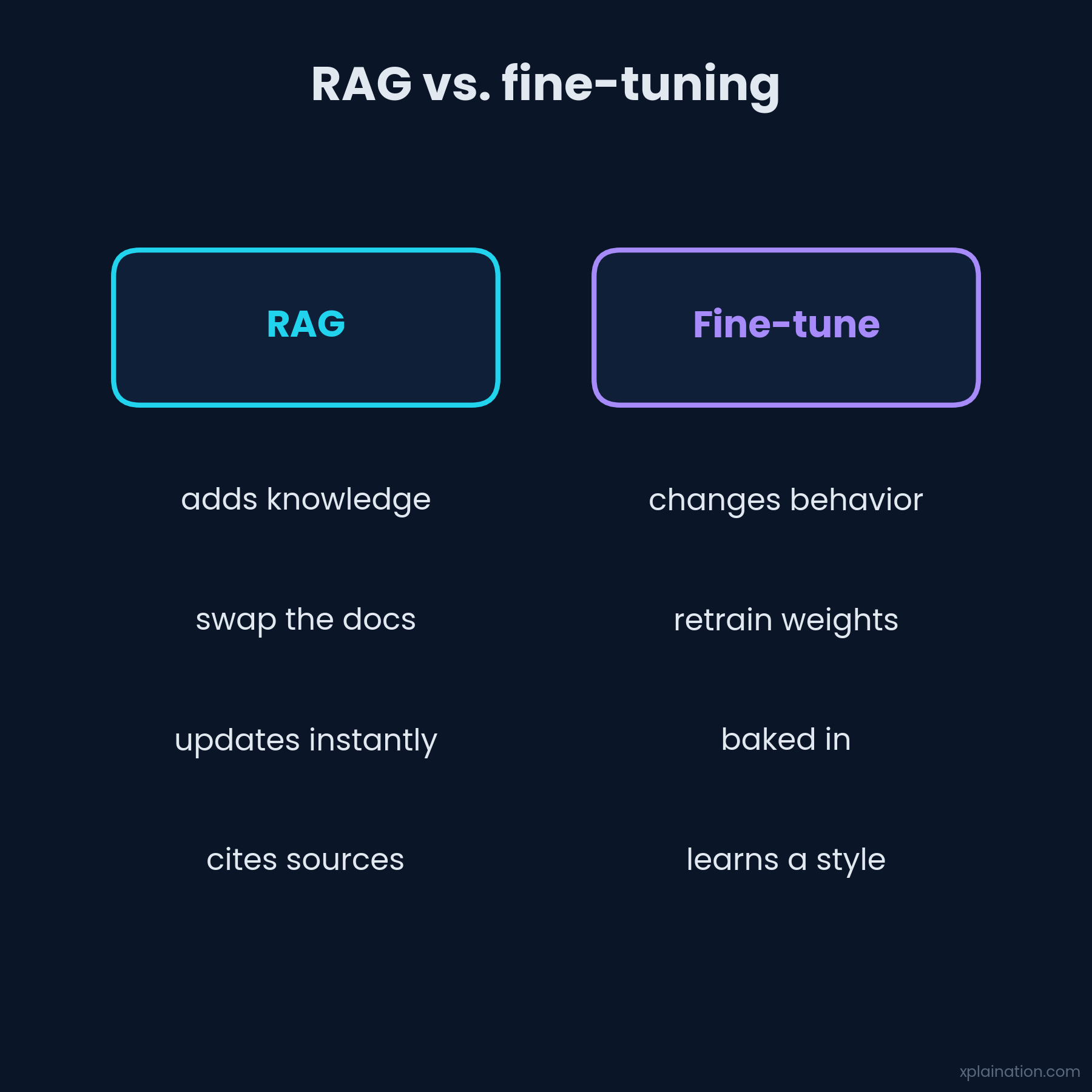
Everyone asks: RAG or fine-tuning? They’re different jobs. RAG gives a model knowledge it can swap anytime. Fine-tuning changes how it behaves. Need fresh facts and citations? RAG. Need a consistent voice or skill? Fine-tuning. Often you want both.
Where You’ve Seen It
RAG is why a chatbot can cite your company wiki, today’s headlines, or a PDF you uploaded 30 seconds ago. It’s the backbone of “chat with your documents,” Perplexity-style search, and most serious enterprise AI.
What Comes Next
We can give a model knowledge. But a raw, pretrained model still has no manners — it doesn’t even know it’s supposed to be helpful. Time for the finale.
Coming up: fine-tuning and alignment — how a raw model learns to behave.
Quick Quiz 🧠
1. What are the three steps of RAG?
Answer: Retrieve (find relevant documents via embedding similarity), Augment (insert them into the prompt), and Generate (have the model answer using that context).
2. Why does RAG reduce hallucinations?
Answer: It grounds the answer in retrieved, real documents instead of relying solely on the model’s frozen parametric memory — and it can cite sources.
3. When would you choose fine-tuning over RAG?
Answer: When you need to change the model’s behavior, style, or skills — not just its knowledge. RAG supplies swappable facts; fine-tuning bakes in behavior.
Source: What is Retrieval-Augmented Generation? (IBM), RAG Explained (Pinecone), RAG vs Fine-Tuning (Red Hat)
Watch the full lesson